
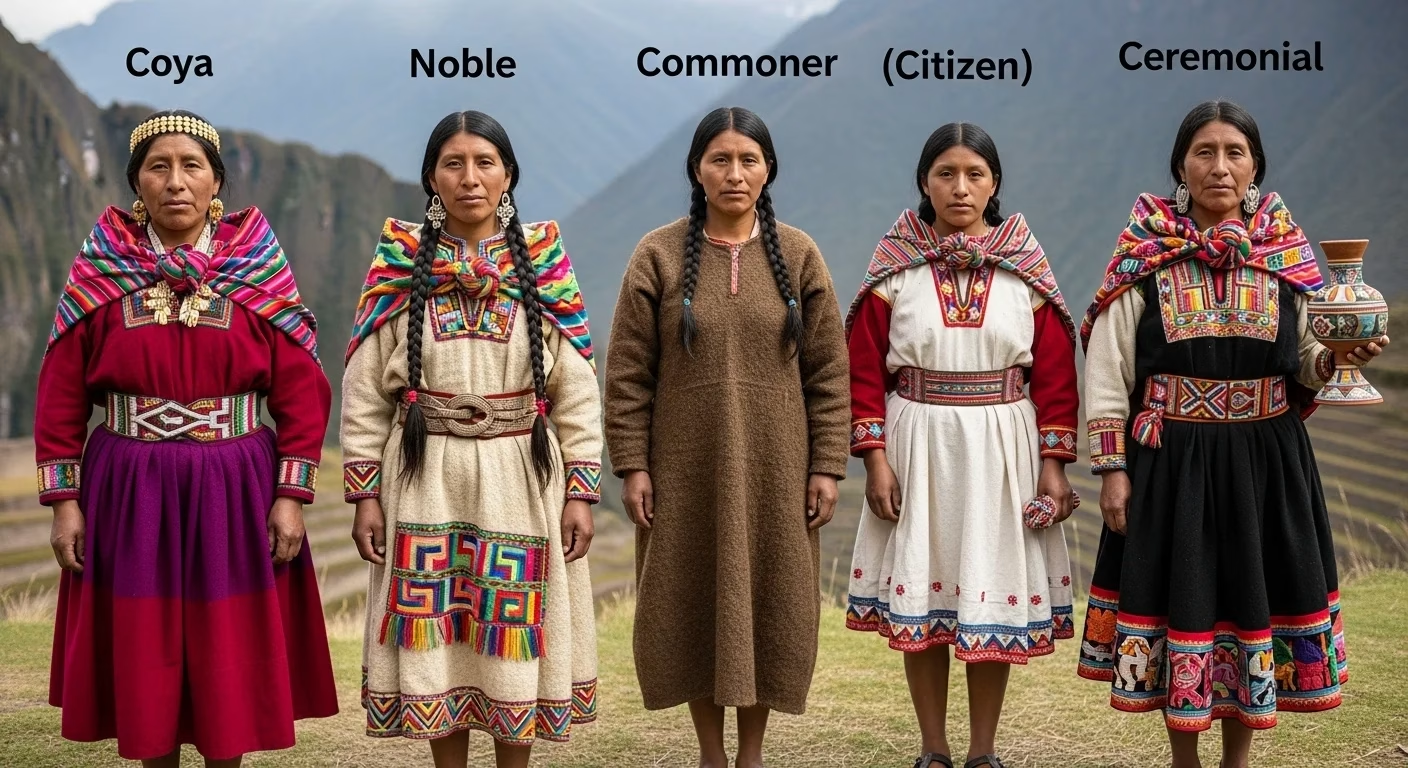
Inca civilization had a clearistic social context expressed in apparel. Common people wore simple and practical clothes. This helped them during long days of farming in tough highland or coastal areas.
Men commonly wore a tunic called an unku, woven from the coarse wool of llamas and alpacas. They completed the outfit with a belt and sandals. Women traditionally wore the acsu.
A long rectangular piece of fabric tied at the shoulders with a belt was present. They often also had a lliclla, which is a type of shawl. These clothes were simple, but they were helpful for the weather in the Inca empire.
However, for the inca nobility and high ranking officials, apparel was a prominent representation of privilege and power. Nobles wore clothes made of fine materials. Elaborate decorations and vibrant colors characterized their Inca Clothing, elements not permitted for commoners.
Laws clearly distinguished classes of apparel, and those who broke the laws received punishment. traditional peruvian clothing styles clearly showed the social order of farmers, priests, warriors, and rulers in the Inca empire.
