
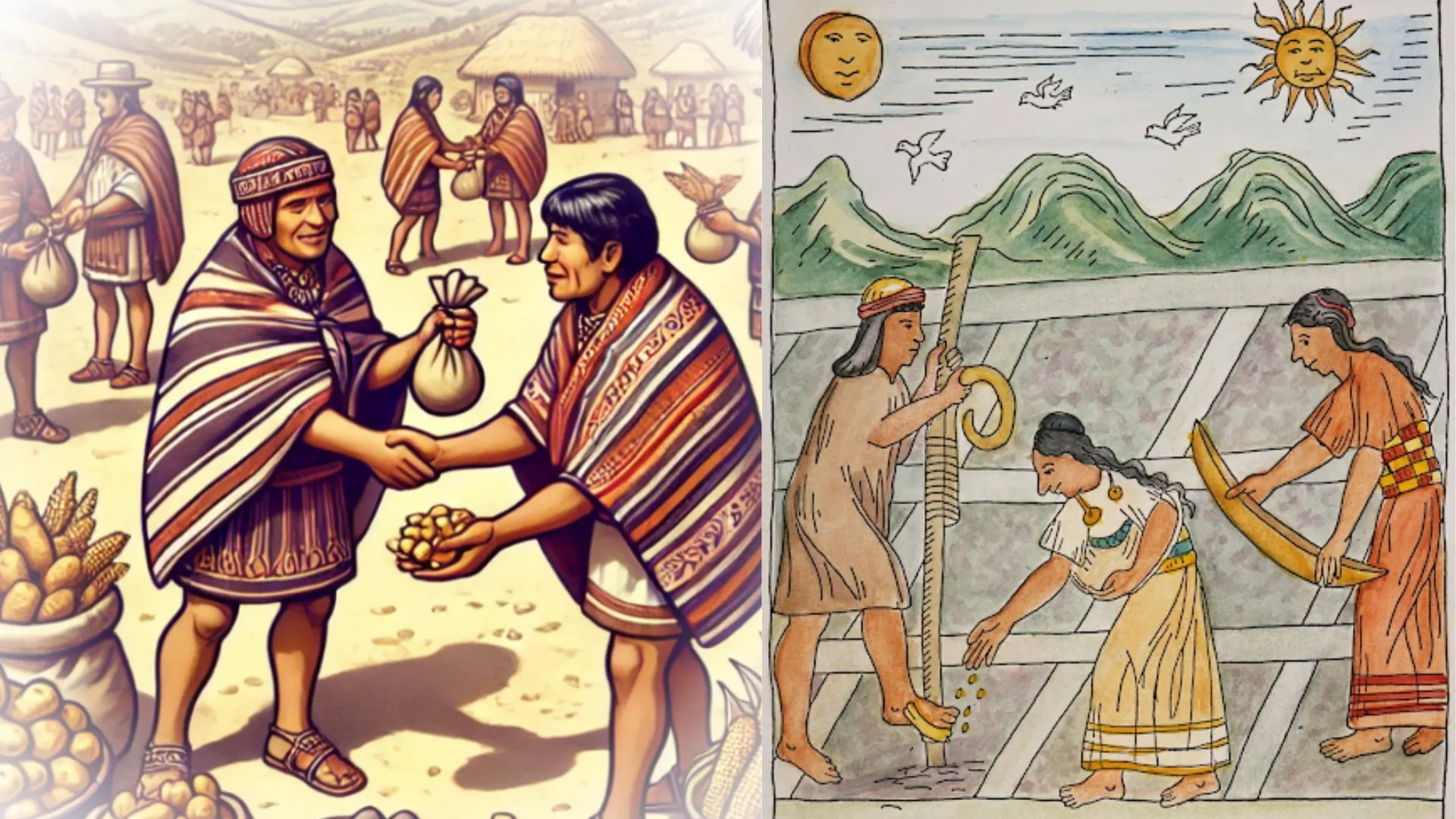
Most people have a mental image of the Incas based on Machu Picchu; they see temples made of granite and stories about gold gods, but they never think about how these remarkable structures and their legends came to be. It is necessary to learn about the economy of incas if one wants to know why and how the Incas created such a vast territory and controlled millions of people living in desert, jungle, and alpine conditions throughout the Andes Mountains. When we talk about the Inca economy, we are really talking about a highly organized system where politics, society, and production were deeply connected.
The Incas were able to achieve this high level of societal organization and productivity through the use of community labor, unmatched agricultural expertise, and systematic planning by the central authority of the state. Historians argue that the economic system of the Incas represents one of the most sophisticated and successful examples of state control over an economy in the ancient world, and that the economy of the Inca was uniquely stable compared to other empires of its time.
To fully comprehend the Inca civilization, one must examine the basic components of the Inca economy, the ways in which the Inca economy was organized, and the reasons for its longevity. Only then is it possible to see how the incas economic system allowed the empire to expand and how was the inca empire organized around labor and land rather than money and markets.
