
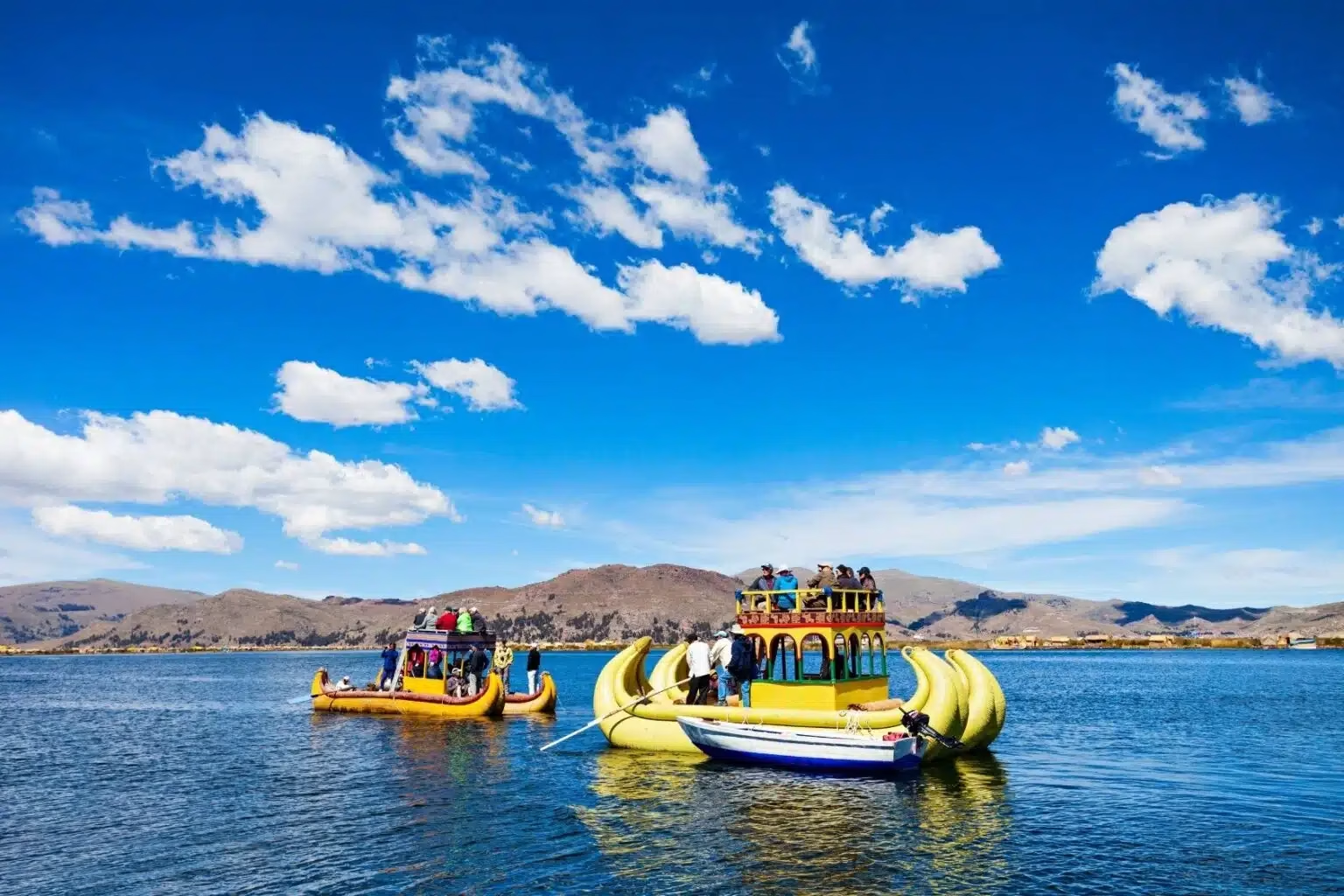
Lake Titicaca is located high in the Peruvian Andes and is undoubtedly among the most remarkable natural attractions found in South America, not only because of its breathtaking scenery but also because it is a sacred place that is intimately linked to Peru’s historic and cultural identity. Its tranquil blue waters have provided life, art, and mythology for countless generations of the Andean peoples.
Though it sits at an altitude of 3,812 meters (12,507 feet) above sea level, Lake Titicaca is regarded as the highest navigable lake in the world. It spans part of the border between Peru and Bolivia and covers 8,300 square kilometers. This massive body of water is framed by terraced hillside, traditional villages, and snowcapped peaks, making it one of the most mesmerizing sites that one can encounter in the Andes.
Table of Contents
Lake Titicaca Facts: Elevation, Depth & Location
To truly understand what is special about Lake Titicaca, you must look at the numbers that make it a geographical wonder of the Andes.
- Where is Lake Titicaca located in Peru? It is situated on the high Andes plateau, straddling the border between Peru and Bolivia. The Peruvian side belongs to the Puno region.
- Lake Titicaca Elevation: It sits at exactly 3,812 meters (12,507 feet) above sea level.
- Record Holder: Yes, Lake Titicaca is the world’s highest navigable body of water used by commercial vessels.
- Depth: The lake reaches a maximum depth of 281 meters (922 feet) near Isla Soto.
- Surface Area: It covers approximately 8,372 square kilometers (3,232 sq mi), making it the largest lake in Peru.
